HATS²™

Highly Accelerated Thermal Shock Testing
Reliability Assessment Solutions for Electronics

HATS²™ (Highly Accelerated Thermal Shock) is an advanced reliability and robustness testing solution designed to simulate convection reflow assembly and evaluate the performance of PCB and substrate via structures, including plated through holes (PTHs). Engineered for precision and speed, HATS²™ enables manufacturers to rapidly assess how materials, chemicals, design changes, and process variations impact via structure reliability before products reach the field.

Capable of cycling between -65°C and +265°C with exceptional accuracy, the system can perform up to 1,000 thermal shock cycles per week, dramatically accelerating reliability qualification and failure analysis. Its integrated real-time resistance monitoring** provides immediate insight into interconnection degradation, enabling accurate detection of barrel cracking and interconnection separation as they occur.

HATS²™ allows engineers to simulate multiple reflow assembly cycles, overstress samples, and perform rapid thermal shock testing to evaluate both reliability and robustness under extreme conditions. By replicating the thermal stresses encountered during manufacturing and product operation, the system helps organisations understand how changes in materials, chemicals, processes, and designs affect via structure performance and long-term durability.

Ideal for high-reliability industries including aerospace, defence, medical devices, and electronics manufacturing, HATS²™ delivers the data needed to ensure products don't just function in the laboratory—they continue to perform reliably in demanding real-world environments.
 

HAT's Reliability Assessment Solutions Inc
Key Features
Functionality
  • Testing of IPC-2221B Type "D", HATS²™  Single Via Coupons*, Substrate & Custom Coupons of up to 7 Test Nets
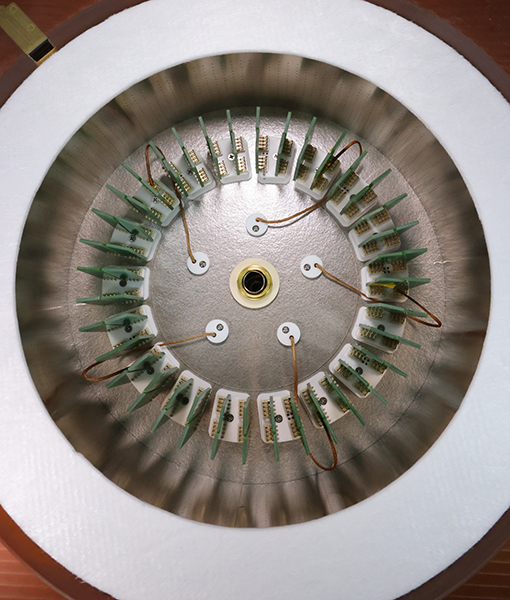
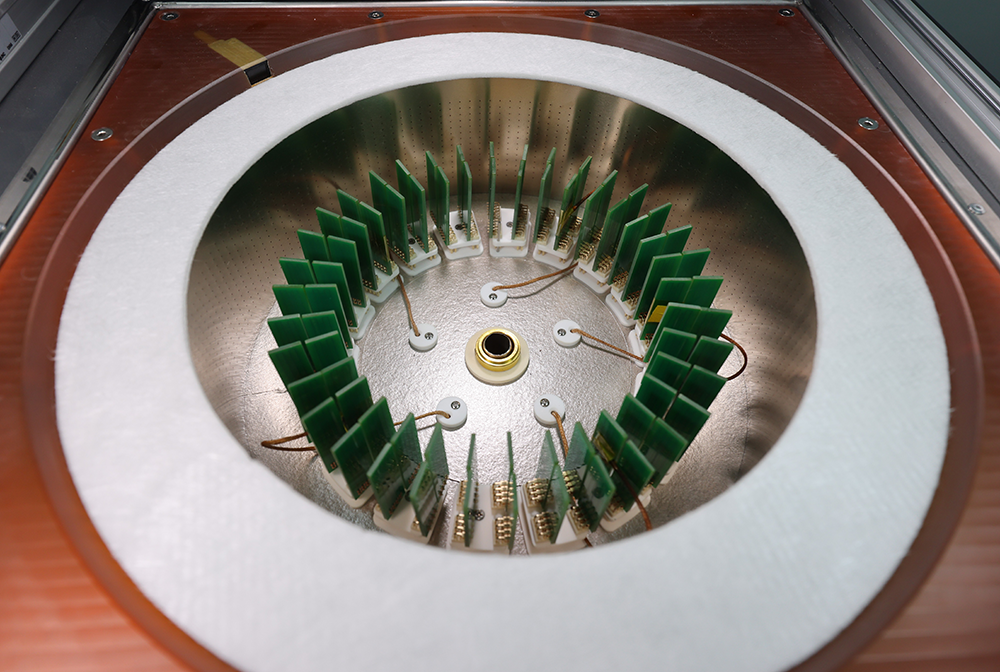
  • 72 IPC D Coupon or 36 HATS²™ Single Via*/Custom Coupon Test Chamber Capacity
  • Air-to-Air Thermal Shock Compliant with IPC-TM-650 Method 2.6.7.2C 
  • Rapid Temperature Cycles or Custom Profiles Between -65°C to +265°C
  • Reduced Thermal Shock Cycle Time by 60% to 80% (-1000 Cycles per Week)
Specifications
  • Convection Reflow Assembly Simulation Complaint with IPC-TM-650 Method 2.6.27B with In-Situ Resistance Monitoring
  • Built-in Reflow Profiler Allows any Reflow Cycles to be Simulated Automatically
  • Robustness Testing of Unlimited Consecutive Reflow Cycles or Any Cycle from -65°C to +265°C
  • HATS²™ & HATS²™ Test Services Available around the World
  • Detailed Graphical Test Report Including Box Plots
FAQs

HATS™ and HATS²™ Thermal Cycling uses a HATS²™ Tester to perform Thermal Shock/Cycling in accordance with IPC-TM-650 method 2.6.7.2 and other industry Thermal Shock/Cycling test methodologies. The HATS²™ Tester uses High Speed "Air" as the heat transfer (fluid) mechanism to heat and cool the test coupons. This methodology changes the air volume in the test chamber surrounding the coupons several times each second. HATS²™ technology provides the maximum possible transfer rate to move heat through the test coupons using Air as a heat transfer mechanism. This changes the limiting thermal factor from the thermal capacity of the test chamber to the coupon's mass and thermal conductivity. HATS²™ technology allows the test coupons to equalize at temperature extremes in 3-6 minutes rather than the 30 minutes required by Dual Chamber and other technologies, greatly speeding up the testing process.

Test Coupon nets are electrically tested (real time) in the HATS²™ Chamber using an updated 4-wire test measurement sub-system to make accurate and repeatable resistance measurements. This allows the HATS²™ tester to determine barrel cracking or interconnection separation in the via structures. HATS²™ testers can test up to 72 IPC-2221B "D" coupons (2 or 3 test nets) , 36 Traditional HATS™ (4-nets) , HATS²™ Single Via Coupons* (7-nets) or Custom 7-net coupons during Reflow Simulation and Thermal Shock/Cycling to determine barrel cracking or interconnection separation in the via structures.

The HATS²™ Tester most closely replicates the "Air" heat transfer mechanism of the widely accepted Dual Chamber technique that has been in use since the 1950's. Other High Speed Thermal Shock technologies use different heat transfer mechanisms like Oil, Liquid Nitrogen, Sand or Circuit Conduction to transfer heat to the coupons which results in different heat transfer rates to and from the test coupons than would occur in air. This will affect test results of the Test Coupons under test. HATS²™ testers can test up to 252 nets (single via structure and daisy-chains) from a variety of industry accepted and custom test coupon styles using up to 7 test nets each. Accomplishing Thermal Shock of 1000 cycles with a full load of coupons can take weeks if not months using other "high speed" technologies due to their limited test coupon/net capacity when compared to the HATS²™ tester. The HATS²™ tester can accomplish 1000 Thermal Shock cycles of 36 to 72 coupons in about a week. Carefully research the methodologies, their heat transfer mechanisms and their ultimate test net capacity before you decide on which technology is right for you.

HATS²™ Convection Reflow Simulation allows the user create multiple Convection Reflow Profiles in accordance with IPC-TM-650 method 2.6.27B or other customer defined reflow profiles. These Reflow Profiles are created in segments using the HATS²™ software and the HATS²™ test system will automatically adjust the surface temperature of the Coupons to match the desired profile, saving significant time and effort. This automatic approach does not require additional Reflow Profiling samples which must be discarded after profiling and does not "guess" the profile based upon Coupon thickness like other Reflow Simulation technologies. The HATS²™ Tester uses High Speed "AIR" as the heat transfer (fluid) mechanism to rapidly heat and cool the test coupons without using Liquid Nitrogen. This provides the maximum possible heat transfer rate to and from the test coupons using AIR as the heat transfer mechanism. This allows a HATS²™ tester to automatically adjust the surface temperatures of test coupons to precisely emulate those encountered when going through any of today's Multi-Zone Convection Reflow Ovens.

A HATS²™ Tester can monitor the resistance on test nets from up to 72 IPC-2221B "D" coupons (2 or 3 net) , 36 Traditional HATS™ (4-net), HATS²™ Single Via* or custom designed coupons (up to 7 test nets) during multiple cycle (up to 100) Convection Reflow Simulations to determine barrel cracking or interconnection separation in the via structures during a simulated component attachment process or to evaluate the robustness of the manufacturing process and materials used. Test Coupon nets are electrically tested in the HATS²™ Chamber using a 4-wire sub-system that allows accurate and repeatable measurements of the test nets in order to determine barrel cracking or interconnection separation of the via structures.

The HATS²™ Tester most closely replicates the "AIR" heat transfer mechanism of the widely accepted Dual Chamber technique that has been in use since the 1950's. Other High Speed Thermal Shock technologies use different heat transfer fluid mechanisms like Oil, Liquid Nitrogen, Sand or Circuit Heating Conduction to transfer heat to the coupons which results in different heat transfer rates to and from the test coupon materials and via structures than would occur in AIR. Other heat transfer mechanisms will affect the results of the Coupons under test. HATS²™ testers can test up to 252 nets (single via structure and daisy-chain) from a variety of industry accepted and custom test coupon styles using up to 7 test nets each. Carefully research the methodologies, their heat transfer mechanisms and their ultimate test net capacity before you decide on which technology is right for you.

Traditional HATS™ and IPC-2221B "D" Coupons are Daisy Chain electrical coupons and can be electrically tested with other Thermal Shock/Cycling Technologies, including Dual Chamber. In addition to these widely used coupons, HATS²™ testers can test HATS²™ Single Via & Custom test Coupons* of up to 7 low resistance test nets which requires a unique measurement system to accurately measure resistances below 0.001 Ohm. Currently no other accelerated Thermal Shock/Cycling Technology can replicate HATS²™ technology measurement capability.

The HATS²™ Tester uses High Speed Air as the heat transfer (fluid) mechanism to heat and cool the test coupons along with a 4-wire resistance measurement system which guarantees high accuracy testing of the coupon nets.

The HATS²™ Tester most closely replicates the "AIR" heat transfer mechanism of the widely accepted Dual Chamber technique that has been in use since the 1950's. Other High Speed Thermal Shock technologies use different heat transfer fluid mechanisms like Oil, Liquid Nitrogen, Sand or Circuit Heating Conduction to transfer heat to the coupons which results in different heat transfer rates to and from the test coupon materials and via structures than would occur in AIR. Other heat transfer mechanisms will affect the results of the Coupons under test. HATS²™ testers can test up to 252 nets (single via structure and daisy-chain) from a variety of industry accepted and custom test coupon styles using up to 7 test nets each.

Accomplishing a Thermal Shock test of 1000 cycles with the volume of coupons/nets that the HATS²™ Tester can achieve in one chamber load can take weeks, if not months using other "high speed" technologies due to their limited test coupon/net capacity and thermal transfer techniques when compared to the HATS²™ tester. The HATS²™ tester can accomplish 1000 Thermal Shock cycles of 36 to 72 coupons in about a week. Carefully research the methodologies, their heat transfer mechanisms and their ultimate test net capacity before you decide on which technology is right for you.

Depending on coupon type, HATS²™ can hold:

  • Up to 72 IPC-2221B “D” coupons (2–3 test nets),
  • Or 36 single-via or custom (up to 7-net) coupons.

    It can complete up to 1,000 thermal shock cycles per week, compressing testing time by 60–80% compared to traditional methods.

  • IPC-TM-650 Method 2.6.7.2C for air-to-air thermal shock,
  • IPC-TM-650 Method 2.6.27B for convection reflow simulation with in-situ resistance monitoring.
    It also allows users to define custom thermal or reflow profiles via the proprietary software.

Multiple via structures daisy-chained together have historically been tested to assess via reliability, robustness or component attachment process (convection reflow) survivability in an attempt to obtain some sort of statistical significance in via sampling. The first issue encountered with a daisy-chain testing of via structures is that depending on design, 70-90+% of the measured resistance comes from the circuit traces connecting the via structures together and not from the actual via structures themselves.  

A typical single plated via structure has a resistance ~ 0.001 Ohms. In a 0.200 Ohm daisy-chain net, only 0.020 to 0.060 Ohms represents a plated via structure's resistance. A 10% crack/separation in ALL of the plated via structures at the same time, would only result in a 1 to 3% change in daisy-chain resistance and would not trigger a failure event. Even a 30% crack/separation in ALL the plated via structures in the daisy-chain at the same time would not exceed the typical 10% resistance change failure criteria for daisy-chain test nets. The assumption that all the plated via structures in a daisy-chain will fail at the same rate is highly unlikely and it would take a 95+% crack/separation of one or a few plated via structures to register a 10% failure change in the resistance of a typical daisy-chain of plated via structures. A 0.001 Ohm change in a 0.200 Ohm daisy-chain (representing an ~50+% crack/separation in 2-3 plated via structures), would read as a 0.5% change in total daisy-chain resistance, a value that would be seen as electrical noise or slight shift in temperature of the test chamber and would not even be noted dispite the significant depredations of some of the via structures. 

Each 1°C change in temperature within a test chamber results in ~0.393% change in the electrical resistance of pure copper. Typical Shock/Cycling Chambers are rated at +/- 1.5°C which equates to 1.18% in electrical resistance variation just due to acceptable temperature tolerance within the test chamber which also hides these results in "noise".

It is clear that daisy-chains of plated via structures are only electrically sensitive to the end of a via structure's failure and cannot readily determine when a plated via structure begins its failure process. Daisy-chains certainly have their place in via structure reliability & robustness testing as they can determine when a plated via experiences complete failure, but the testing of single via structures is the only way to observe cracks / separations in plated via structures from their initiation through to failure.

Understanding the mechanics of via structure failure is important to understanding the root cause of failure while implementing corrections to the manufacturing process. Knowing when your plated via structures begin to fail is important to determine robustness & reliability, evaluate material selection and implement process control. Being able to see the initiation point of via structure's failure using a Single-Via Structure rather than a daisy chain can enable a better understanding between differences in the manufacturing process while simplifying failure analysis by identifying the exact via structure where the failure occurred. As Via Structures have become more complicated and combine multiple technologies to form increasingly complicated structures, having sensitivity to measure small resistance changes resulting from degradation in a part of via structure is paramount to understanding the interaction with and failure mechanisms between connected structures within the Via.

Technical Specification
Dimensions
Dimensions:
W 141cm x D 90cm x H 119cm - Case Lid H 21cm
Internal Bias Voltage
Voltage:
235-240 volt AC 50/60Hz 50A
(Specify when order is placed)
Weight
Weight:
438kg
 .

HATS Technical Webinar

Missed the HATS2™ Technical Webinar with Bob Neves — or want to share it with your team?
Now you can download the full on-demand session and dive into everything you need to know about the HATS²™ Highly Accelerated Thermal Shock Tester.

In this comprehensive webinar, HATS²™ creator and industry expert Bob Neves walks you through the technology and best practices that make HATS2™ a leader in advanced reliability testing. You’ll discover:

  • How reflow profiling ensures precise thermal management
  • Setting and optimising cycling parameters for consistent results
  • Real-world comparisons that highlight performance and accuracy
  • Data output, analysis, and reporting for better decision-making
  • Automation features that streamline workflows
  • Advanced capabilities designed to meet evolving test requirements

Whether you’re evaluating thermal shock testing solutions or looking to get more from your current process, this webinar offers practical insights and expert guidance to help you achieve superior results.

Contact Us